8 Actionable Tips For Your Google Ads Campaigns in 2025

You’re about to discover how your Google Ads campaigns can thrive in 2025’s evolving digital landscape. As AI-driven optimization becomes the norm and privacy regulations reshape targeting capabilities, you’ll need to adapt your strategy to stay competitive. Whether you’re managing a modest local campaign or orchestrating enterprise-level advertising, these eight actionable tips will help you navigate the complexities of modern PPCPay Per Click, a marketing model where advertisers pay only when someone clicks on their link. advertising. From leveraging Performance Max to mastering first-party data integration, each strategy builds upon proven techniques while embracing emerging technologies that’ll define successful campaigns in 2025.
Master Performance Max Campaigns
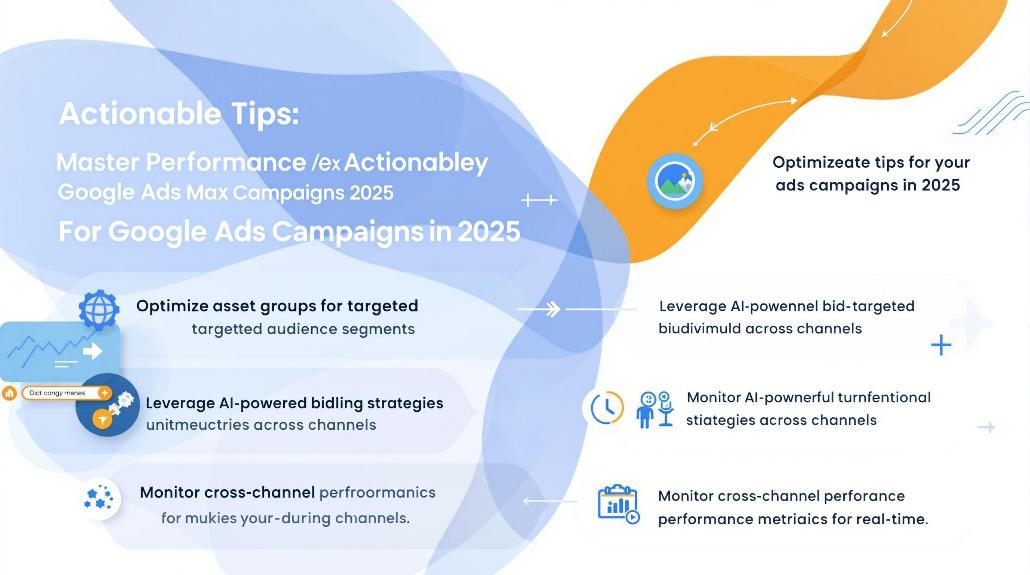
Performance Max campaigns let you reach customers across Google’s entire network while using AI to optimize your ad performance automatically.
You’ll boost your campaign effectiveness by creating comprehensive asset groups with high-quality images, videos, and compelling ad copy that speaks directly to your target audience’s needs.
Benefits of Performance Max
Through the power of advanced machine learning, Google’s Performance Max campaigns represent a game-changing approach to digital advertising in 2025.
You’ll see significant advantages when implementing Performance Max campaigns, starting with automated ad placements across Google’s entire inventory. The system actively optimizes your campaigns by analyzing real-time data and adjusting your bids to meet specific conversionThe completion of a desired action by a user# such as a purchase# sign-up# or download. Conversions are the ultimate goal of most marketing campaigns and serve as a key metric for measuring success. goals.
You don’t need to manage multiple campaigns anymore – everything works together efficiently in one place.
The dynamic nature of Performance Max means your ads will automatically adapt across different formats and platforms. This versatility helps you reach your target audience wherever they are, while machine learning ensures your message stays relevant.
You’ll save time on campaign management while potentially seeing better results through automated optimization and broader reach.
Master Google Ads Affiliate Marketing in 2025
The only Google Ads affiliate marketingAffiliate marketing is a performance-based online marketing strategy where businesses (often called merchants or advertisers) reward individual marketers (known as affiliates or publishers) for driving traffic, leads, or sales to the business’s products or services. In this model, affiliates earn a commission for each agreed-upon action completed by a referred customer. Key aspects of affiliate […] course that shows you real campaigns, real results, and proven scaling strategies. No theory – just actionable steps.
Setting up effective asset groups
In successful Performance Max campaigns, setting up effective asset groups serves as the foundation for achieving optimal results. You’ll want to organize your creativeThe visual or textual elements of an advertisement designed to capture attention and drive user action. Effective creatives are tailored to the ad format and target audience# balancing aesthetic appeal with persuasive messaging. assets strategically to maximize engagement across multiple channels and connect with your target audience.
To optimize your asset groups:
- Create distinct groups for different audience segments
- Include diverse asset types (images, videos, headlines)
- Use clear naming conventions for easy management
- Monitor performance metricsKey performance indicators used to measure the success of affiliate marketing efforts, such as conversion rate, EPC, and ROI. regularly
Let Google’s machine learning work to your advantage by providing various creative combinations. This allows the system to dynamically select the best-performing assets for each situation.
Remember to analyze your performance data frequently and make adjustments based on what’s working best. By maintaining well-organized asset groups and implementing consistent performance optimization, you’ll see improved campaign results and better engagement rates.
Leveraging first-party data
Every successful Performance Max campaign relies heavily on the strategic use of first-party data to drive results. By integrating your customer insights, you’ll significantly improve conversion rates through personalized ad experiences that truly connect with your audience.
To maximize your campaign performance, focus on creating custom segments based on your first-party data. This approach enables more precise audience targetingThe practice of tailoring marketing efforts to reach a specific group of consumers most likely to be interested in a product or service. across multiple channels. Your historical customer data helps Performance Max’s machine learning algorithms better predict user intent and deliver more relevant ads.
Key benefits of leveraging first-party data:
- Enhanced targeting precision
- Higher engagement rates
- Improved ROIReturn on Investment, a key performance indicator calculated as a percentage by dividing profit by cost and multiplying by 100. through personalization
- Better cross-channel optimization
- More accurate audience insights
Remember to regularly update and analyze your first-party data to keep your campaigns aligned with changing consumer behaviors and preferences.
Implement AI-Driven Bidding Strategies
You’ll want to start implementing AI-driven bidding strategies by choosing between Target ROAS and Target CPA based on your specific campaign goals.
Your automated bidding settings will continuously analyze user behavior, device data, and timing patterns to make real-time adjustments that maximize your campaign performance.
Target ROAS vs Target CPA
When deciding between Target ROAS and Target CPA bidding strategies, your campaign objectives should drive the choice.
Target ROAS focuses on maximizing revenueTotal earnings from promoting an offer, regardless of profitability. per ad dollar spent, making it ideal if you’re prioritizing sales volume and return on investment.
Meanwhile, Target CPA helps control your cost per new customer acquisition, perfect for lead generationThe process of attracting and converting strangers and prospects into someone who has indicated interest in a company’s product or service. campaigns.
Automated bidding powered by AI can help optimize either approach, adjusting your bids in real-time based on user behavior and market conditions.
You’ll typically see up to 30% improvement in performance when using these AI-driven bidding strategies.
The key is to monitor your conversions consistently and let the machine learning algorithms analyze your data to predict which strategy will work best for your specific goals.
Remember to regularly review and adjust your approach based on performance metrics.
Automated bid adjustments
Building on these automated strategies, AI-driven bid adjustments represent a game-changing advancement in Google Ads management.
You’ll find that automated bidding can boost your conversion rates by up to 30% compared to manual methods, while optimizing your return on ad spend (ROAS).
Smart bidding options leverage machine learning to analyze real-time data, automatically adjusting your bids based on factors like location, device, and user behavior.
You’ll want to focus on options like Target CPA and Maximize Conversions, which use historical data to set optimal bids. To maximize success, keep track of your performance metrics regularly and make data-driven refinements to your strategy.
Key benefits of automated bid adjustments:
- Dynamic optimization across multiple factors
- Improved campaign efficiency
- Reduced manual workload
- Better allocation of your advertising budget
Performance monitoring and optimization
Performance monitoring lies at the heart of successful AI-driven bidding strategies. By regularly tracking your campaign effectiveness, you’ll be able to make data-backed decisions that boost conversion rates and maximize your return on investment.
To optimize your campaigns effectively:
- Review your performance metrics daily to spotThese are advertising spaces. On TV and radio, it’s ten to 60 seconds of air time. On websites, it’s above the fold, on the sidebar, between the content and more. trends and opportunities
- Adjust your bidding strategies based on real-time data insights
- Test different automation options like Target CPA and Target ROAS
- Monitor how machine learning algorithms respond to changes in user behavior
You’ll find that AI-driven bidding takes the guesswork out of optimization by automatically analyzing countless signals. This means your campaigns can adapt instantly to changing market conditions, ensuring your budget is always working efficiently.
Remember to let the automated systems gather enough data before making major adjustments to your strategies.
Optimize for First-Party Data Collection
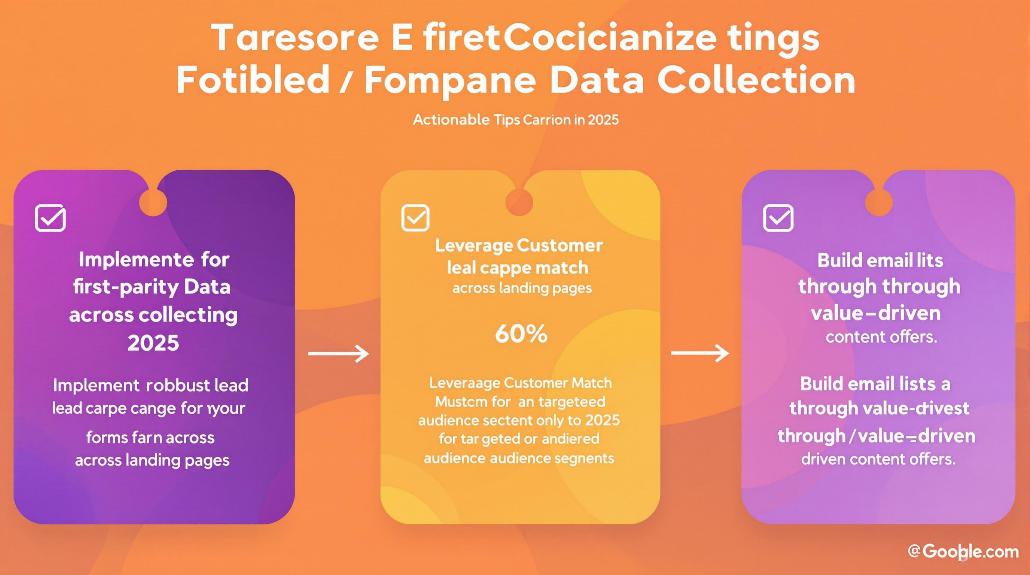
As third-party cookiesSmall data files stored on users’ devices to track browsing behavior and preferences. Cookies enable personalized experiences# targeted advertising# and accurate attribution in affiliate marketing campaigns. become obsolete, you’ll need to focus on building robust first-party data collection systems through your website and landing pages.
You can achieve this by implementing strategic email capture forms, loyalty programs, and transparent opt-inThe process by which a user gives permission to receive communications, typically via email. processes that encourage visitors to share their information willingly.
Cookie alternatives
The sunset of third-party cookies in 2024 means you’ll need to pivot your Google Ads strategy toward first-party data collection.
To maintain effective targeting, focus on building direct relationships with your audience through value-driven exchanges.
Consider implementing these cookie alternatives for your google ads optimization strategy:
- Create gated content that encourages newsletter signups
- Offer exclusive discounts for account creation
- Use enhanced conversions to track user journeys
- Implement clear privacy policies to build trust
- Leverage CRM tools for customer segmentation
Building customer lists
Building robust customer lists through first-party data collection stands at the heart of successful Google Ads campaigns in 2025.
You’ll want to leverage your website analytics and CRM systems to gather valuable customer insights, which can boost your targeting accuracy by up to 20%.
Focus on creating consent-driven strategies that build trust while collecting essential data points.
- Implement tracking pixels across your digital touchpoints to capture visitorThis is a user who landed on your page. behavior and preferences
- SegmentA division of the market based on specific demographics or characteristics. your customer lists based on purchase history, engagement levels, and browsing patterns
- Create lookalike audiences from your best-performing customer segments
- Use email marketingThe use of email to promote products or services while developing relationships with potential customers or clients. integrations to sync subscriber data with your Google Ads account
Data integration strategies
Maximizing the power of first-party data integration will revolutionize your Google Ads performance in 2025. By implementing effective consent-based data collection practices, you’ll gather valuable insights directly from your website visitors and customers, leading to more accurate audience segmentation.
To optimize your campaigns:
- Set up tracking parameters to capture user behavior across your digital touchpoints
- Create custom audiences based on specific interactions and demographics
- Implement personalized ad targeting using collected data points
- Monitor conversion patterns to refine your targeting approach
Remember to prioritize data privacy while collecting information.
You’ll want to clearly communicate how you’re using customer data and ensure compliance with regulations. This transparency builds trust and improves campaign optimization efforts, resulting in higher engagement rates and better return on ad spend.
Enhanced Mobile-First Ad Experience
Your mobile-first ad strategy needs to focus on speed-optimized landing pages that load in under three seconds to keep today’s on-the-go users engaged.
You’ll want to implement mobile-specific formats like call-only ads and location-based extensions to connect with users searching for immediate solutions in their area.
Mobile-specific ad formats
The shift toward mobile-specific ad formats has become imperative for successful Google Ads campaigns in 2025, with over 54% of global web trafficThis is the inflow of visitors to a page. now coming from mobile devices.
You’ll need to adapt your strategy to leverage responsive ads that automatically adjust to different screen sizes and user contexts.
- Implement click-to-call buttons and location targeting features to capture the 76% of nearby searchers who visit businesses within 24 hours.
- Optimize video ads for mobile viewing, as they’ll account for 75% of mobile data consumption by 2025.
- Design fast-loading, responsive ads that minimize bounce rates and maintain user engagement.
- Focus on seamless user experiences across platforms to boost conversion rates by up to 160%.
Your mobile-specific ad formats should prioritize quick loading times, easy navigation, and clear calls-to-action to maximize campaign performance in this mobile-first environment.
Speed optimization
Speed performance stands as a critical pillar for successful mobile-first ad campaigns in 2025, with studies showing that 53% of users abandon sites after just three seconds of loading time.
That’s why speed optimization must be at the forefront of your strategy.
To boost your page speed and user engagement, you’ll want to:
- Compress all images without sacrificing quality
- Minimize JavaScript usage
- Implement efficient code practices
- Regularly test using Google PageSpeed Insights
Local campaign integration
When planning mobile-first ad campaigns in 2025, integrating local targeting capabilities becomes essential for maximizing ROI, as over 50% of local searches now convert to store visits within 24 hours.
To capitalize on this trend, you’ll need to optimize your local campaigns with enhanced location targeting and mobile-first design principles.
- Implement location-based extensions to display crucial business information like store hours and directions directly in your ads.
- Leverage local inventory ads to showcase real-time product availability at nearby stores.
- Ensure your mobile optimization meets Google’s speed requirements for seamless user experience.
- Use precise location targeting to reach potential customers when they’re in proximity to your business.
Video Ad Integration
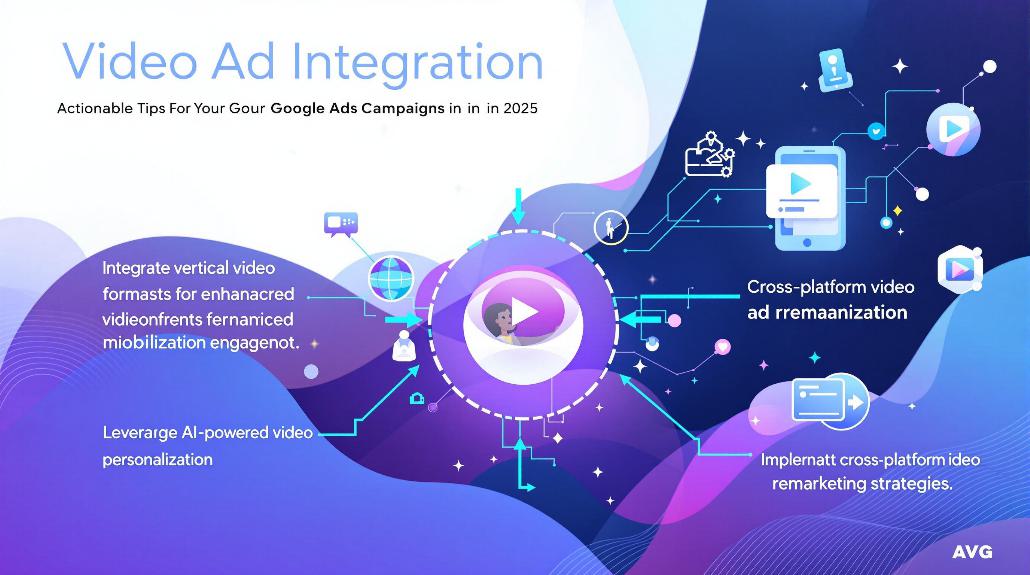
You’ll want to leverage YouTube Shorts advertising to capture the growing short-form video audience while implementing diverse video ad formats across Google’s display network.
Your video strategy should span multiple platforms, from YouTube to Discovery campaigns, ensuring you’re reaching audiences where they’re most engaged.
YouTube Shorts advertising
YouTube Shorts’ explosive growth presents a golden opportunity for advertisers in 2025.
With over 2 billion monthly users and high engagement rates, this verticalThis refers to the products or offers which aim to provide solutions or services to a targeted demographic. The target audience is a well-defined segment of the market. In affiliate marketing, it can sometimes be referred to as a niche or a subcategory. video format offers a powerful way to reach your target audience. You’ll need to capture attention quickly, as viewers typically spend around 30 seconds on each Short.
To maximize your YouTube Shorts advertising success, focus on these essential elements:
- Create eye-catching visuals and compelling hooks in the first few seconds
- Keep your message concise and impactful within the 60-second limit
- Leverage YouTube’s advanced targeting options to reach specific demographics
- Monitor view duration metrics and adjust content accordingly
Video ad formats
Video ad integration stands as a cornerstone of successful Google Ads campaigns in 2025. With video ads projected to drive 82% of consumer internet traffic, you’ll need to leverage this format to stay competitive.
Focus on creating engaging content that’s optimized for mobile viewing, as over 90% of users prefer watching videos on their smartphones.
To maximize your campaign’s effectiveness, incorporate different video ad formats across platforms like YouTube. You’ll see up to 1200% higher user engagement compared to static ads, and your conversion rates could improve by 80%.
Remember to implement targeted advertising strategies to reach specific demographics effectively.
Consider these key formats:
- In-stream ads for brand awareness
- Discovery ads for product showcases
- Bumper ads for quick messaging
- Non-skippable ads for important announcements
Cross-platform video strategy
In line with evolving digital trends, a comprehensive cross-platform video strategy has become essential for Google Ads success in 2025. Your cross-platform advertising approach should seamlessly integrate video ads across multiple channels to maximize reach and engagement rates.
When you implement A/B testingA method of comparing two versions of a webpage or other content to determine which one performs better. for different video creatives and placements, you’ll gain valuable insights that can boost click-throughThe user action of clicking on an advertisement or hyperlink and successfully loading the destination page. This metric is fundamental in assessing the initial effectiveness of ad creatives and promotional content. rates by up to 30%.
- Incorporate interactive elements like polls and quizzes to increase user engagement by 50%
- Ensure your video content adapts automatically to different screen sizes using responsive formats
- Maintain consistent messaging across YouTube, Facebook, and Instagram to improve brand recall by 80%
- Track performance metrics across platforms to optimize your campaign’s effectiveness
Local Search Optimization
You’ll boost your local visibility by integrating your Google Business Profile with your Google Ads campaigns, ensuring your business details appear prominently in local search results.
Local inventory ads can help you showcase your in-store products to nearby shoppers, driving foot traffic to your physical location.
Google Business Profile integration
Local businesses can turbocharge their Google Ads performance by integrating a well-optimized Google Business Profile into their advertising strategy.
With proper integration, you’ll boost your local search visibility and potentially increase click-through rates by up to 35%. Your Quality Score improves when you maintain accurate business information and engage with customer reviews and ratings.
- Update your profile regularly with fresh photos, business hours, and service details
- Respond promptly to customer reviews to build trust and credibility
- Leverage Google Posts to showcase time-sensitive promotions and updates
- Monitor and optimize your profile’s performance metrics monthly
Local inventory ads
Building on your enhanced Google Business Profile, implementing local inventory ads takes your local search strategy to the next level. By showcasing your products in Google search results and Maps, you’ll increase foot traffic and connect with customers actively searching in your area.
To get started, set up your Google Merchant Center account with accurate inventory data and store locations.
Don’t forget to incorporate location-based keywords in your ad copy to boost visibility for nearby searchers. This powerful combination typically drives 20% more store visits, as customers can instantly check product availability before heading to your location.
For best results, keep your inventory data current and monitor your higher conversion rates through analytics.
This real-time approach ensures you’re maximizing every opportunity to attract local shoppers who are ready to buy.
Geographic bid adjustments
Smart location targeting through geographic bid adjustments enables precise control over your ad spend across different regions.
By analyzing your high-performing regions and adjusting bids accordingly, you’ll maximize your conversion potential while optimizing your budget. Data shows businesses using geographic targeting see a 20% higher conversion rateA crucial performance indicator measuring the percentage of visitors who complete a desired action. Calculated by dividing the number of conversions by total visitors# this metric guides optimization strategies across marketing channels. on average.
Here’s what you’ll achieve with strategic geographic bid adjustments:
- Boost local search optimization by increasing visibility to nearby customers
- Improve click-through rates (CTRThe percentage of people who click on a specific link or call to action out of the total number who view it.) by targeting users in specific locations
- Allocate budget more effectively across different geographic areas
- Customize bids based on real-time performance data from each region
Advanced Audience Targeting
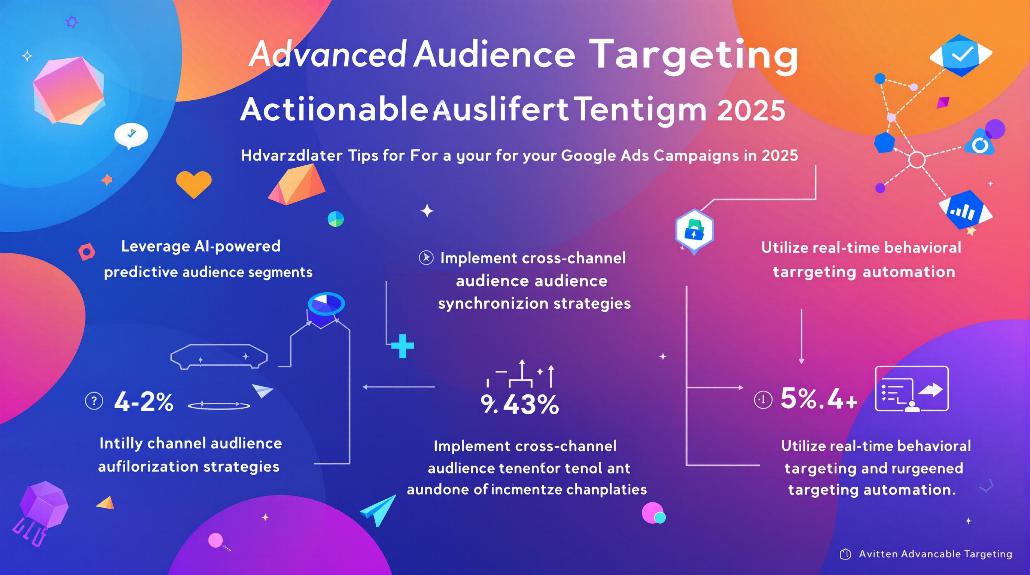
To maximize your Google Ads performance in 2025, you’ll need to master advanced audience targeting through strategic segmentation of your customer base and precise audience list management.
Your remarketing campaigns should focus on re-engaging previous website visitors with customized messaging, while also implementing dynamic retargeting to show them specific products they’ve viewed.
You can expand your reach by creating lookalike audiences based on your best-performing customer segments, allowing you to connect with new prospects who share similar characteristics and behaviors with your existing customers.
Audience segmentation
Mastering audience segmentation in Google Ads has become crucial for 2025’s competitive digital landscape.
You’ll need to leverage audience signals and custom audiences effectively to create highly targeted campaigns that deliver personalized experiences. By combining in-market segments with lookalike audiences, you can expand your reach while maintaining relevance to potential customers.
- Create custom audience lists based on your CRM data and website visitors for more precise targeting
- Implement lookalike audiences to find new customers who share traits with your best performers
- Use in-market segments to reach users actively searching for your products or services
- Regularly refine your audience targeting based on performance metrics and engagement data
Keep testing and optimizing your segments to ensure you’re reaching the right people at the right time with the most compelling messages.
Remarketing strategies
Effective remarketing strategies have evolved significantly for 2025, demanding a more sophisticated approach to re-engage past visitors and drive conversions. You’ll need to implement dynamic remarketing to showcase products users previously viewed, which can boost conversion rates by up to 70%.
To maximize engagement, segment your audience based on specific behaviors and site interactions. Consider factors like:
- Pages visited
- Time spent on site
- Previous purchase history
Don’t forget to set frequency caps on your ads to prevent audience fatigue. Test multiple ad formats and messages to identify what resonates best with each segment.
Lookalike audiences
Building on your remarketing success, lookalike audiences represent the next level of audience targeting in Google Ads for 2025. By leveraging Google’s machine learning algorithms, you’ll tap into new customer segments that share characteristics with your existing buyers. This powerful targeting method analyzes user behavior and demographics to enhance ad relevance and boost conversion rates.
- Create multiple lookalike audiences based on different customer segments to test which performs best
- Regularly update your source audience data to maintain targeting accuracy
- Monitor performance metrics to adjust audience size and targeting parameters
- Combine lookalike targeting with other strategies to maximize market reach
You’ll find that lookalike audiences can significantly improve your campaign’s ROI by connecting with prospects who are most likely to convert.
Keep refining your targeting criteria based on performance data to ensure sustained success.
Conversion Tracking & Analytics Integration
You’ll need to set up GA4 cross-platform tracking to get a complete view of how users interact with your ads across different devices and channels.
By implementing enhanced conversions, you’re able to track offline activities like phone calls and in-store visits alongside your online conversion data.
Your integration of offline-to-online attribution models will reveal the true impact of your Google Ads campaigns by connecting customer touchpoints across their entire journey, from initial ad click to final purchase.
Setting up GA4 Cross-Platform Tracking
Mastering GA4 cross-platform tracking is crucial for maximizing your Google Ads performance in 2025.
You’ll need to properly configure data streams and implement precise tagging to ensure accurate tracking across your websites and apps. By integrating GA4 with your Google Ads campaigns, you’ll unlock real-time insights into user behavior and conversion patterns.
Here’s what you need to focus on when setting up GA4 cross-platform tracking:
- Define clear conversion events that align with your business objectives
- Set up proper data streams for both web and app properties
- Implement comprehensive event tracking for all crucial user interactions
- Verify cross-platform data accuracy through regular testing and monitoring
Remember to leverage GA4’s enhanced capabilities for measuring user interactions across different platforms.
This integration will help you make data-driven decisions and optimize your campaigns for better performance and ROI.
Implementing Enhanced Conversions
Proper implementation of enhanced conversions stands as a cornerstone for successful Google Ads campaigns in 2025. You’ll need to focus on maximizing tracking accuracy across multiple devices and sessions to fully understand your customers’ journey.
To optimize your campaign performance, integrate your Google Ads with Google Analytics for deeper insights into user behavior. This integration enables you to:
- Track cross-device conversions accurately
- Improve user targeting based on first-party data
- Measure return on ad spend (ROAS) more precisely
- Identify valuable conversion paths
With third-party cookies phasing out, enhanced conversions become crucial for maintaining effective attribution. By leveraging this feature, you’ll get clearer insights into which campaigns drive results, allowing you to make data-driven decisions that boost your advertising effectiveness and overall campaign success.
Offline to Online Attribution Models
You’ll need server-side tagging and customer journey mapping to effectively track how your offline marketing efforts translate into online conversions in Google Ads.
Cross-device tracking capabilities paired with robust attribution modeling let you understand exactly how customers move between channels before converting.
Setting up conversion value rules helps you assign accurate revenue numbers to different touchpoints, giving you the insights needed to optimize your marketing spend across both offline and online channels.
Server-side tagging
In today’s privacy-focused digital landscape, server-side tagging represents a pivotal advancement for tracking conversions and integrating analytics in Google Ads.
You’ll achieve better data privacy compliance while improving tracking accuracy for your campaigns.
- Sends data directly from servers, bypassing browser limitations and ad blockers
- Enables comprehensive offline to online attribution modeling
- Improves page load times by reducing client-side code
- Delivers more reliable conversion trackingThe process of measuring and analyzing how many visitors to a website complete a desired action, such as making a purchase or signing up for a newsletter. for accurate ROI measurement
Customer journey mapping
Modern customer journey mapping revolutionizes how marketers track and optimize Google Ads performance across multiple touchpoints.
You’ll gain deeper insights into user behavior by connecting offline interactions with online engagement through comprehensive conversion tracking.
Implement data-driven optimizations by analyzing customer paths across channels, helping you refine marketing strategies and improve campaign ROI with targeted messaging.
Attribution modeling
Understanding how customers interact with your ads across multiple touchpoints is vital for optimizing Google Ads performance in 2025. Attribution modeling helps you track both online and offline conversions while identifying which marketing channels drive the best results.
- Integrate conversion tracking across all customer touchpoints
- Analyze cross-channel attribution data to optimize campaign spending
- Use data-driven attribution models to understand the full customer journey
- Implement offline-to-online tracking for comprehensive performance insights
Cross-device tracking
Building on effective attribution modeling, cross-device tracking takes your measurement capabilities to the next level in 2025.
You’ll gain comprehensive insights into how users interact with your ads across multiple devices, enabling smarter conversion tracking and deeper understanding of user behavior.
Conversion value rules
Through strategic implementation of conversion value rules in 2025, you’ll unlock powerful insights into the true impact of your Google Ads campaigns.
By integrating offline to online attribution and analytics integration, you’ll make smarter data-driven decisions about your ad spend.
- Set custom values for different conversion types
- Track both online purchases and offline interactions
- Implement cross-channel attribution modeling
- Analyze conversion patterns to optimize targeting
Custom reporting dashboards
Custom reporting dashboards serve as your command center for monitoring both online and offline conversion data in 2025.
With integrated analytics and conversion tracking tools, you’ll gain deep insights into campaign performance across channels.
Make data-driven adjustments by analyzing which keywords and audiences drive results, and use these insights to optimize your campaigns for better ROI.