Asset Group Creation and Management

You’ll maximize efficiency by organizing your assets into strategic groups based on specific criteria like location, function, or security needs. Asset groups let you streamline operations through manual selection for smaller sets or dynamic grouping for larger collections. You can create up to 30 groups across two organizational layers, implement standardized naming conventions, and utilize RFID tracking for real-time visibility. Regular audits and monitoring help eliminate ghost assets while maintaining security through access controls and risk assessments. By establishing clear maintenance schedules and optimization strategies, you’ll discover powerful ways to enhance your asset management effectiveness.
2025’s #1 Google Ads Affiliate Marketing Course [Limited Time Offer]
Learn the exact Google Ads strategies that generated $7M in affiliate commissions. Includes real campaign examples, templates, and bonus 30-Day Challenge course.
Understanding Asset Groups
In today’s digital advertising landscape, asset groups serve as the cornerstone of effective campaign management. You’ll find that these logical groupings help streamline your operations by organizing related assets based on specific criteria or characteristics that matter to your business. It’s crucial to ensure all assets within a group belong to the same corporate book.
When you’re contemplating asset group creation, you’ve got two main approaches to choose from. You can manually select and group assets if you’re working with a smaller set, or implement dynamic grouping based on filtered searches for larger collections. Risk calculations are directly influenced by asset group memberships. Only authorized administrators can create and manage these groups. It’s worth noting that you can also copy existing groups to create similar but slightly different collections, saving valuable setup time.
Here’s what makes asset groups particularly powerful:
- They enable granular access control
- You can implement static or dynamic grouping
- They support both manual and automated management
- They allow for flexible asset categorization
As you work with asset groups, you’ll need to reflect on ownership and access management carefully. Global Administrators typically oversee these groups, but you can delegate control to specific business units.
Remember that you can apply business context tags to further organize your assets and streamline your management processes.
Key Features and Capabilities
When it comes to asset groups, their key features and capabilities extend far beyond simple organization. Through effective asset group optimization, you’ll gain access to powerful management tools that streamline your workflow and enhance campaign performance. Group rules must be established before implementing any asset groups. IT assets can be assigned to one group only, ensuring clear organizational hierarchy. A maximum of 30 asset groups can be created within two organizational layers.
You can create hierarchical structures with groups and subgroups, making it easier to categorize and manage your assets efficiently. The system allows you to perform bulk actions, saving time when updating multiple assets simultaneously. Whether you’re using the UI, REST APIApplication Programming Interface: a set of protocols and tools enabling communication between different software applications. APIs are crucial for integrating diverse systems and automating processes in affiliate marketing., or file-based imports, you’ll find flexible options for managing your groups.
Key capabilities include:
- Dynamic group creation based on specific criteria
- Policy assignment and risk management tracking
- Multi-group asset assignment for different purposes
- Customizable tagging and filtering options
- Automated user alerts and notifications
The operational benefits are substantial, as you’ll be able to:
- Generate extensive reports on group performance
- Track security posture changes in real-time
- Manage documents centrally within groups
- Scale your asset management efficiently
- Set group-specific depreciation rates
These features combine to create a robust framework that supports both small-scale operations and enterprise-level asset management needs.
Setting Up Asset Groups
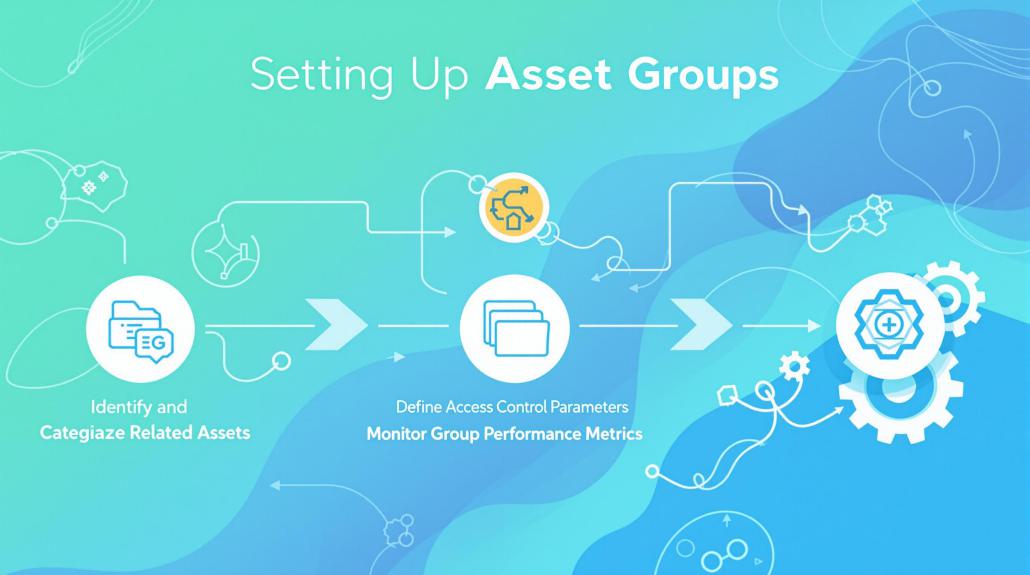
Setting up asset groups kicks off with a straightforward process that requires careful planning and attention to detail.
You’ll start by progressing to the Inventory section and clicking on Asset Groups, where you can begin building your asset group structure through several methods.
When creating your first asset group, you’ve got multiple approaches to choose from:
- Manual selection – ideal for smaller asset collections
- Dynamic grouping – perfect for large-scale asset management
- Copying existing groups – efficient for creating variations
The name “None” should be avoided when naming your asset groups, as it may conflict with system defaults.
You’ll need to name your group, add an optional description, and carefully consider your asset criteria.
Remember, once you’ve added members to a group, you can’t modify certain attributes, so it’s essential to get it right from the start. You can also set up automatic asset addition rules and implement security policies to protect sensitive content.
Your asset groups can be interconnected – assets can belong to multiple groups, and groups can contain various assets.
This flexibility allows you to create a robust organizational system that adapts to your business needs while maintaining streamlined control over your digital assets.
Best Practices for Group Management
When you’re working with asset groups, you’ll need to organize them strategically to maximize efficiency and maintain clear oversight of your resources.
You can optimize your asset group structure by implementing standardized naming conventions, setting up logical hierarchies, and establishing clear rules for asset classification that align with your business objectives. Business unit organization enables streamlined oversight and clearer accountability within each department. Implementing RFID tracking systems provides real-time visibility into asset movement and usage patterns.
Your focus should be on creating a balance between security measures and operational flexibility, while ensuring that risk assessment protocols are consistently followed across all asset categories. Regular physical audits help eliminate ghost assets that could comprise up to 30% of total assets.
Organizing for Maximum Efficiency
An organization’s ability to manage asset groups efficiently hinges on implementing proven best practices and systematic approaches. To maximize your creativeThe visual or textual elements of an advertisement designed to capture attention and drive user action. Effective creatives are tailored to the ad format and target audience# balancing aesthetic appeal with persuasive messaging. asset management effectiveness, you’ll need to establish clear organizational structures and workflows that support your campaign objectives.
Start by categorizing your assets using a logical classification system that makes sense for your business. Implementing automated asset discovery tools can significantly streamline your inventory management processes. You can create templates for different asset types to guarantee consistent information collection and maintain quality standards.
When organizing your groups, consider implementing these key strategies:
- Use descriptive tags to quickly identify and track assets across campaigns
- Set up role-based access controls to maintain security while enabling team collaboration
- Create centralized inventory systems for better tracking and auditing
- Establish clear maintenance schedules for regular updates and optimization
Don’t forget to integrate your asset management strategy with your broader business systems.
You’ll want to conduct regular audits to verify asset performance and eliminate any inactive or underperforming elements. This systematic approach helps you maintain an efficient, well-organized asset structure that supports your campaign’s success while making it easier to scale your operations as needed.
Optimizing Asset Group Rules
The successful management of asset groups depends on implementing clear rules and proven enhancement strategies. By following asset group best practices and maintaining a structured approach, you’ll maximize your campaign’s effectiveness across Google’s advertising networks.
- Review your asset groups every 4-6 weeks to identify top performers and areas needing improvement.
- Clone successful asset groups to test different audience signals while maintaining proven creative elements.
- Implement value rules to adjust conversionThe completion of a desired action by a user# such as a purchase# sign-up# or download. Conversions are the ultimate goal of most marketing campaigns and serve as a key metric for measuring success. values based on specific audience characteristics.
- Maintain 6-10 focused asset groups for peak campaign performance and clear audience segmentation.
Including 5-20 high-quality assets per group ensures optimal storytelling and brand representation.
When organizing your asset groups, you’ll want to group them by similar themes and audiences, often aligning with your website’s structure. Regular data-driven optimization of your asset groups contributes significantly to improved ad relevance and performance metricsKey performance indicators used to measure the success of affiliate marketing efforts, such as conversion rate, EPC, and ROI..
Don’t forget to leverage Google’s automatically created assets while maintaining control over critical elements like call-to-action buttons.
Keep a close eye on your asset report to track performance metrics and make data-driven decisions about which combinations work best. Regular performance tracking allows you to identify patterns and trends, providing valuable insights into the effectiveness of your strategies. By analyzing this data, you can fine-tune your approach to maximize results and minimize inefficiencies. Remember, consistent monitoring is the key to staying ahead and making informed adjustments in a dynamic environment.
Start with a Maximize Conversions bidding strategyA plan for determining how much to bid for ad placements in pay-per-click advertising campaigns. for new asset groups to allow proper learning and optimization.
Remember to use listing groups effectively if you’re running shopping campaigns, as they help manage which products appear based on your Merchant Center attributes.
This systematic approach guarantees your asset groups remain organized and refined for maximum impact.
Security and Risk Assessment
Security vigilance forms the cornerstone of effective asset group management in Performance Max campaigns. When you’re managing valuable advertising assets, it’s essential to implement a thorough security framework that protects your campaign investments while enabling ideal asset performance tracking. A layered defense approach ensures comprehensive protection through multiple security controls. Comprehensive assessments need to cover data and infrastructure security for complete protection.
To strengthen your asset group security, you’ll need to:
- Conduct regular asset inventories and classifications
- Implement robust access controls for asset management
- Monitor data flows between asset groups
- Track user permissions and authentication
Your risk evaluation strategy should focus on:
- Identifying potential threats to campaign assets
- Evaluating vulnerabilities in asset group structures
- Analyzing impact on campaign performance
- Prioritizing risks based on severity
Organizations must adapt quickly as the digital landscape evolves to prevent cyberattacks and data breaches.
You’ll want to establish ongoing monitoring procedures that include:
- Regular security control effectiveness checks
- Periodic vulnerability evaluations
- Performance impact analysis
- Incident response planning
Remember to integrate these security measures with your overall campaign optimization strategy.
Dynamic Group Assignment Strategies
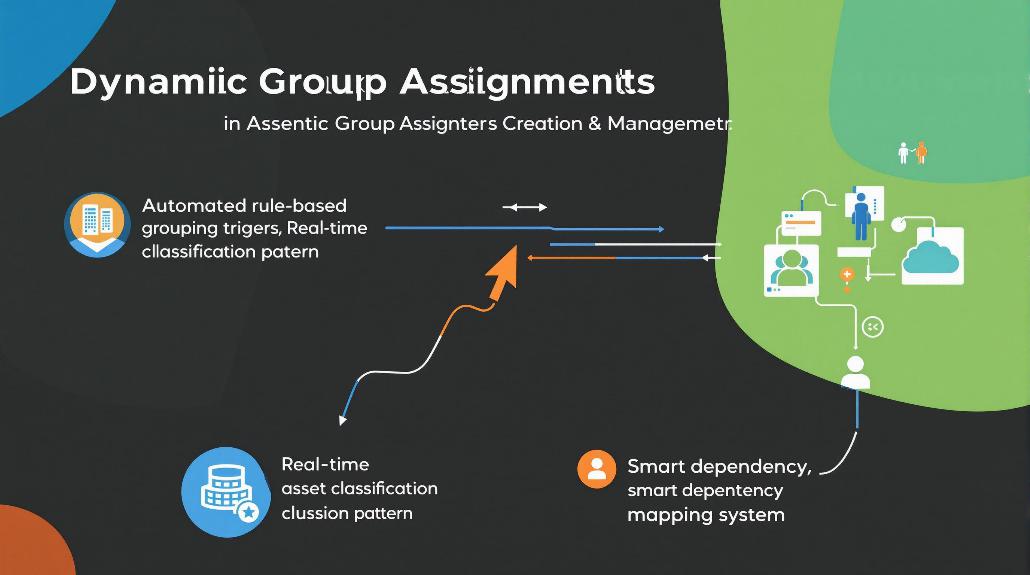
Implementing effective dynamic group assignment strategies requires thoughtful consideration of both technical rules and organizational needs. When creating asset group segmentation, you’ll need to establish clear parameters that align with your campaign objectives while guaranteeing efficient management across your advertising networks.
For optimal effectiveness, groups of four to five members tend to perform best when structuring teams.
Here are the key strategies you should focus on:
- Create attribute-based rules using department, job title, or device characteristics to guarantee precise targeting.
- Implement logical operators for complex rule combinations that capture your intended audience segments.
- Use comparison operators to evaluate multiple values and maintain dynamic group flexibility.
- Set up direct reports rules when organizing manager-based hierarchies.
You’ll want to regularly monitor and adjust your group assignments based on performance data and changing business needs.
Don’t hesitate to use multiple groups when single configurations can’t achieve your desired results.
Remember to avoid using user groups for certain technical implementations, as this can cause complications. Instead, focus on device-based groupings when dealing with specific deployment profiles.
Risk Assessment and Control
You’ll want to start your risk assessment by categorizing asset groups into priority levels based on their business impact and vulnerability potential.
When implementing security controls, you’ll need to match appropriate protective measures to each group’s risk level while considering both automated and manual monitoring approaches.
Your asset group monitoring tools should include real-time tracking systems and regular security audits to guarantee continuous protection of your digital assets across all priority levels.
Group Risk Priority Levels
Risk prioritization forms the backbone of effective asset group management, allowing you to systematically identify and address potential threats. When managing your asset groups within the 100-group limitation, it’s essential to categorize risks based on their severity and potential impact on your campaign performance.
Here are the important risk priority levels you’ll need to take into account:
- Tolerable risks require minimal attention and won’t greatly impact your asset group performance.
- Low-risk issues need basic monitoring but shouldn’t strain your resources.
- Medium-risk concerns demand regular attention and may affect campaign outcomes.
- High-risk and intolerable situations require immediate action and might necessitate asset group restructuring.
To effectively manage these priority levels, you’ll want to use tools like risk prioritization matrices and numerical scoring systems. These help you make informed decisions about resource allocation across your asset groups.
Remember to regularly review and update your risk assessments, as campaign conditions and market dynamics can change quickly. By maintaining a proactive approach to risk management, you’ll guarantee your asset groups remain optimized and perform at their best.
Security Controls Implementation
Building on our understanding of risk priority levels, effective security control implementation forms the foundation of robust asset group protection.
You’ll need to follow a structured approach to guarantee thorough security coverage while maintaining strong asset quality scores across your groups.
Start by conducting thorough risk identification and analysis of your asset groups.
You’ll want to:
- Review existing security policies and procedures
- Assess potential threats and vulnerabilities
- Evaluate impact levels for each identified risk
- Document findings systematically
Next, implement appropriate controls based on your analysis:
- Deploy preventive measures to stop threats before they occur
- Set up detective controls to identify potential security breaches
- Establish corrective controls to address incidents
Remember to verify and monitor your controls regularly through:
- Automated vulnerability scanning
- Manual security testing
- Regular log reviews
- Staff security awareness checks
Your asset quality score will benefit from continuous monitoring and adjustment of these security measures.
Don’t forget to regularly review and update your risk assessments to maintain effective protection as threats evolve and new vulnerabilities emerge.
Asset Group Monitoring Tools
Through thorough monitoring tools, effective asset group management becomes considerably more streamlined and secure. When you’re conducting asset group testing, you’ll want to implement extensive monitoring solutions that track performance, location, and status in real-time. These tools help you maintain control over your assets while optimizing their usage and preventing losses.
- Choose tracking technologies that match your needs: RFID tags for real-time monitoring, GPS sensors for location tracking, or QR codes for quick identification.
- Implement asset tracking softwareThis is the program utilized to monitor your advertising campaigns. that integrates with your chosen hardware and maintains a centralized database.
- Set up automated alerts for maintenance schedules and potential issues to prevent unexpected downtime.
- Utilize cloud-based solutions for anywhere, anytime access to your asset data.
You’ll want to focus on key metrics like downtime percentage, loss rate, and inventory turnover to assess your asset group performance. By implementing these monitoring tools strategically, you can better manage risk and make data-driven decisions about your assets.
Remember to categorize your assets effectively and select monitoring solutions that align with both your organizational requirements and budget constraints.
Workflow Optimization Methods
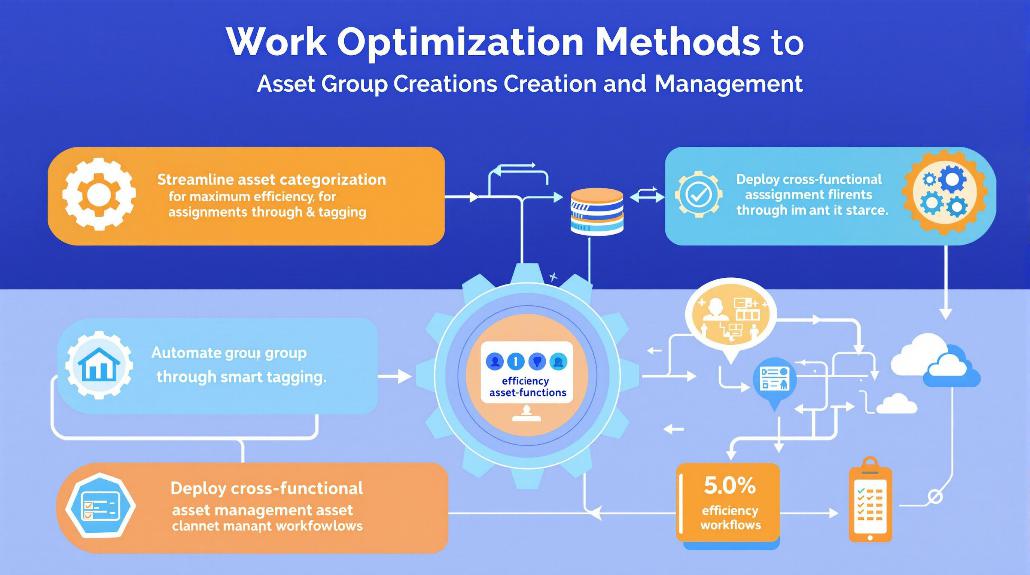
Effective optimization of asset group workflows relies heavily on the implementation of automated systems and data-driven processes. By integrating asset management software with your creative performance metrics, you’ll streamline operations and enhance productivity across your campaigns.
You’ll find that automation reduces manual errors while standardizing your asset management procedures.
To optimize your workflow effectively, consider these key strategies:
- Implement predictive maintenance systems to prevent performance issues
- Establish standardized processes for asset creation and management
- Utilize real-time monitoring tools to track asset effectiveness
- Integrate your systems with existing software platforms
You’ll want to leverage AI and machine learning capabilities to analyze your asset performance data. These tools can help you identify patterns and trends that’ll inform your optimization decisions.
Remember to regularly assess your workflows and apply lean principles to eliminate unnecessary steps.
Don’t forget to invest in proper training for your team. They’ll need to understand how to use these new tools and processes effectively.
Encourage feedback and maintain open communication channels to continuously improve your asset group management system.
System Performance Considerations
When designing asset group systems, you’ll need to carefully balance scalability with performance to prevent operational bottlenecks. Your performance max creative specs must align with system capabilities while maintaining efficient resource utilization.
Consider how asset group size and structure impact scanning speeds and reporting functionality.
To optimize your system‘s performance, focus on these critical elements:
- Monitor resource usage by implementing automated tracking tools that alert you when asset groups approach capacity limits.
- Structure your groups hierarchically to improve data retrieval and processing speeds.
- Set appropriate scan frequencies based on your asset group’s risk level and importance.
- Leverage dynamic grouping to automatically manage assets without manual intervention.
You’ll want to start with broader asset groups before moving to more granular classifications. This approach helps you maintain system efficiency while scaling your operations.
Remember to regularly review and optimize your asset group configurations to guarantee they’re supporting your performance goals. By implementing clear naming conventions and strategic categorization, you’ll create a more manageable and responsive system that can adapt to changing business needs.
Security and Access Management
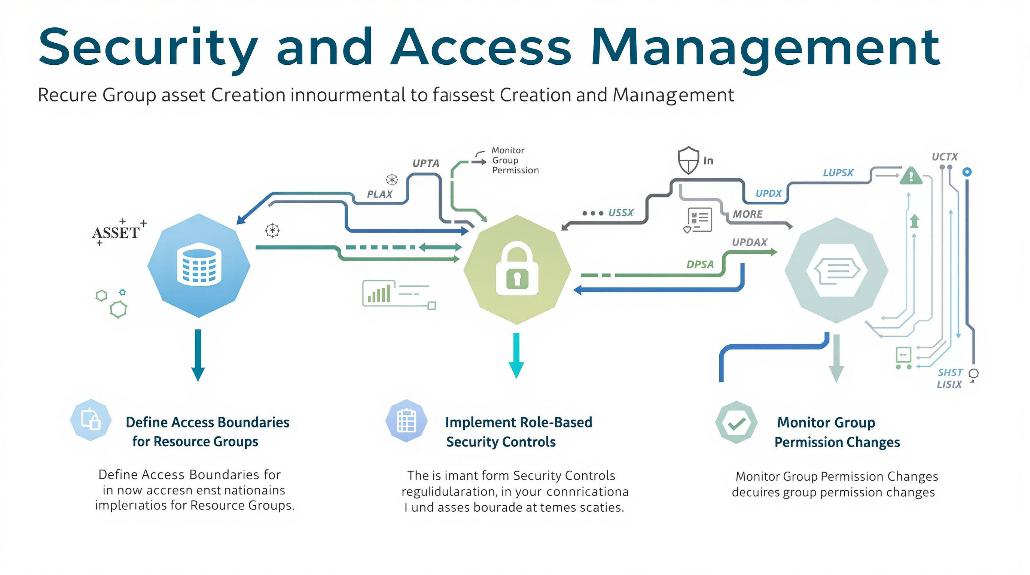
Security plays an essential role in asset group management, requiring robust access controls and clear permissions hierarchies. When you’re managing asset group themes and sensitive materials, it’s vital to implement proper security measures that protect your assets while maintaining operational efficiency.
To effectively secure your asset groups, you’ll need to:
- Set up role-based access controls
- Implement thorough tagging systems
- Establish clear group hierarchies
- Conduct regular security audits
Your security strategy should include regular reviews of access permissions and group configurations. Don’t forget to monitor risk levels within each group and address vulnerabilities promptly.
You can strengthen your security framework by creating linked groups that inherit permissions from parent groups, making management more streamlined.
When implementing security measures, make certain you:
- Document all changes to group settings
- Maintain detailed access logs
- Review user permissions quarterly
- Update security protocols as needed
Remember to balance security with accessibility – while protection is paramount, your teams still need efficient access to perform their tasks.
Consider using automated validation rules to verify assets meet security requirements before group assignment.
Frequently Asked Questions
Can Asset Groups Be Merged After Creation Without Losing Historical Data?
You can’t merge asset groups after creation, but you’ll retain historical data for individual groups. Instead, create new groups while keeping existing ones to preserve performance metrics.
What Happens to Scheduled Tasks When Moving Assets Between Groups?
You’ll need to manually reconfigure scheduled tasks after moving assets between groups, as they won’t automatically transfer. Monitor and update task settings to prevent disruptions in your campaigns.
How Do Asset Group Permissions Transfer During Company Ownership Changes?
You’ll need to reassign permissions when company ownership changes. Keep asset group access aligned with new organizational structures and guarantee administrators update all necessary authorization levels accordingly.
Is There a Way to Temporarily Disable an Asset Group?
You can’t directly disable asset groups in most systems. Instead, try adjusting access rights, manipulating group memberships, or using dynamic groups as temporary workarounds for limited visibility.
Can Machine Learning Automatically Suggest Optimal Asset Group Structures?
You can use AI-driven tools that’ll analyze your campaign data and suggest ideal asset groupings based on performance patterns, audience behavior, and conversion signals across different combinations.