Brand Bidding Affiliate Marketing Tutorial – Turn $1000 in $30,000 With Search Ads
Are you looking to make serious money online but only have a small budget of around $1,000 to start? Well then brand bidding is something you need to try.
Today I’ll share exactly what I would do if I were in your shoes, based on my 20+ years of experience generating millions in revenueTotal earnings from promoting an offer, regardless of profitability. as an affiliate marketer. We’ll cover what niches and affiliate programs to focus on, what my go-to-market strategy would be, and how to scale your modest initial investment into something much bigger. Let’s dive in!
Like Videos Instead?
Why Cost-Per-Action (CPA) Affiliate Marketing is the Way to Go
With a limited starting budget, focusing on cost-per-action (CPA) affiliate marketingAffiliate marketing is a performance-based online marketing strategy where businesses (often called merchants or advertisers) reward individual marketers (known as affiliates or publishers) for driving traffic, leads, or sales to the business’s products or services. In this model, affiliates earn a commission for each agreed-upon action completed by a referred customer. Key aspects of affiliate […] is best. Sign up for a reputable CPA affiliate network, and you’ll get access to many offers you can promote. The beauty of CPA is that you get paid when a user takes action, like submitting their email or buying something. This makes conversions easier.
Some top CPA networks to consider include:
MaxBounty
Clickbank
PerformCB
And many more
Choosing the Right Niche and Offer Type for Your $1000 Budget
When you’re working with a smaller budget, you need to be strategic about the nicheA specialized segment of the market for a particular kind of product or service, often catering to a specific audience or solving a particular problem. and offer types you pursue. I recommend focusing on either digital products like software/ebooks or evergreen physical products. Avoid super competitive niches.
Some examples of offer types that can work well:
E-commerce products (like drones, gadgets, etc)
Software or digital info products
Mobile apps/games
The key is to find an offer that:
Allows brand bidding (more on this in a bit)
Has a decent payout of at least $20-50+ per conversionThe completion of a desired action by a user# such as a purchase# sign-up# or download. Conversions are the ultimate goal of most marketing campaigns and serve as a key metric for measuring success.
Doesn’t have a ton of competition already
An Example of an Affiliate Offer Getting 30%+ Conversions
To show you the power of the strategy I’m about to lay out, take a look at this campaign I’m currently running:
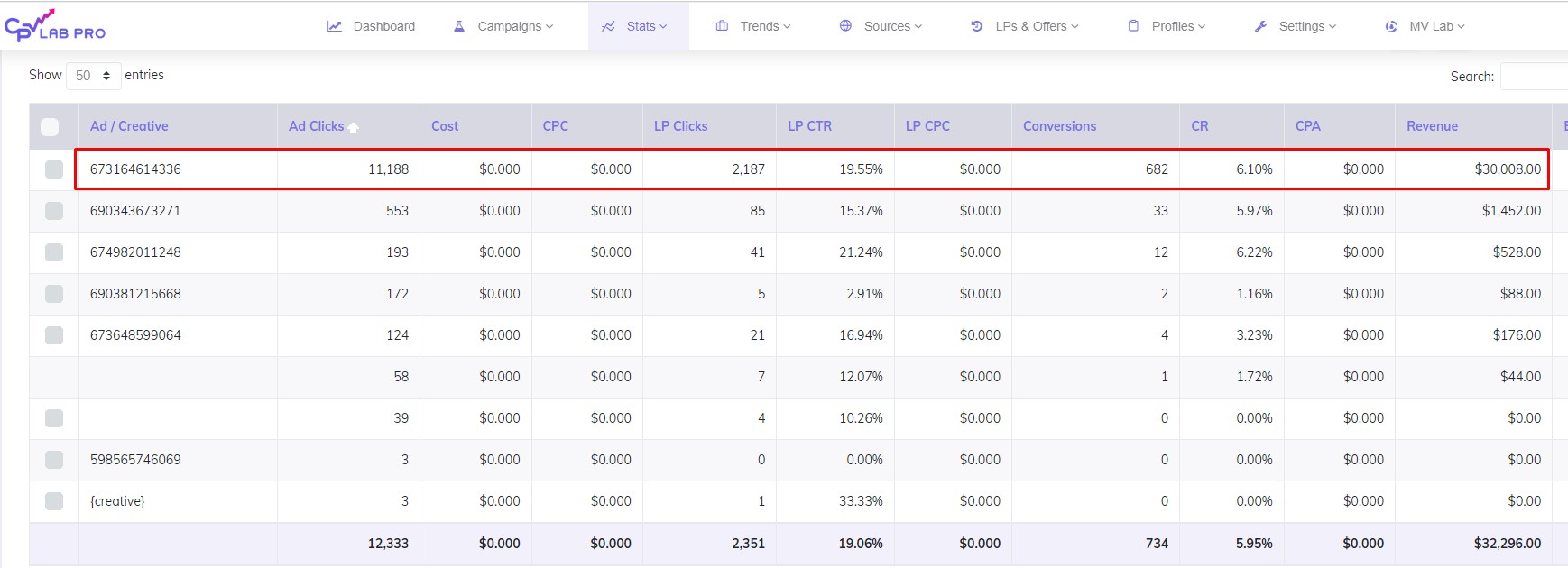
I’m getting an insane 30%+ conversion rateA crucial performance indicator measuring the percentage of visitors who complete a desired action. Calculated by dividing the number of conversions by total visitors# this metric guides optimization strategies across marketing channels. on this offer, generating about $30K in revenue from just 2000 clicks to the offer. How is this possible? The secret lies in a tactic called brand bidding.
What is Brand Bidding for Affiliates & Does it Work?
Brand bidding means bidding on the keywords of the actual product/brand names of the offers you are promoting. When people search for that exact product name, your ad shows up.
The beauty of this is that these people are already at the very bottom of the buying funnel – they know about the product and are actively searching for it! So your conversions will be very high, even with a small budget.
Finding Offers that Allow Brand Bidding
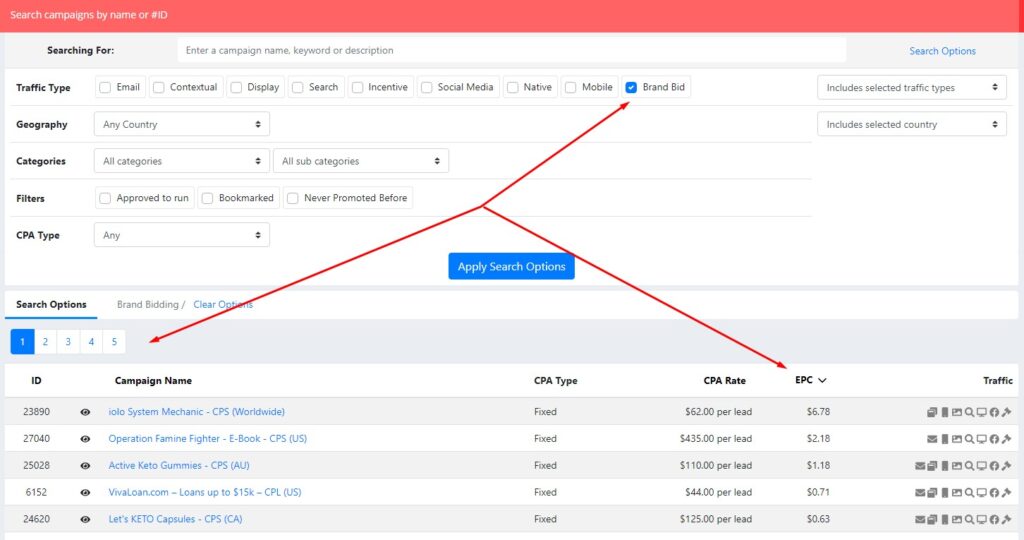
Many affiliate networks, like MaxBounty, allow you to filter for offers that allow brand bidding. Simply do a search for “brand” and see what comes up. Focus on offers that have:
A high EPC (earnings per click) which indicates it converts well
Allows brand bidding in your target country (offers that allow this worldwide are great)
Has a juicy payout of around $50+ if possible
Do Your Keyword Research
Once you’ve identified a promising offer, do some research to see how much search volume there is for that product name. Tools like Google KeywordThis is the term or phrase that users utilize to search for anything on the internet. This can also be the term focused on by SEO experts to drive organic traffic to their website. Planner and SEMrush are great for this.
Ideally, you want an offer with at least a few hundred to a few thousand searches per month, with not a huge amount of competition.
In the example I showed, “iolo system mechanic” has a great search volume to competition ratio.
Setting Up Your Ads and Landing Page
The final step is to set up your search ads to display when people search for your target offer/product name. Write ad copy that matches what an official ad for that product would say.
Check out the Google Ads 30 Day Challenge for a complete course on how to set up these ds for maximum conversions and compliance.
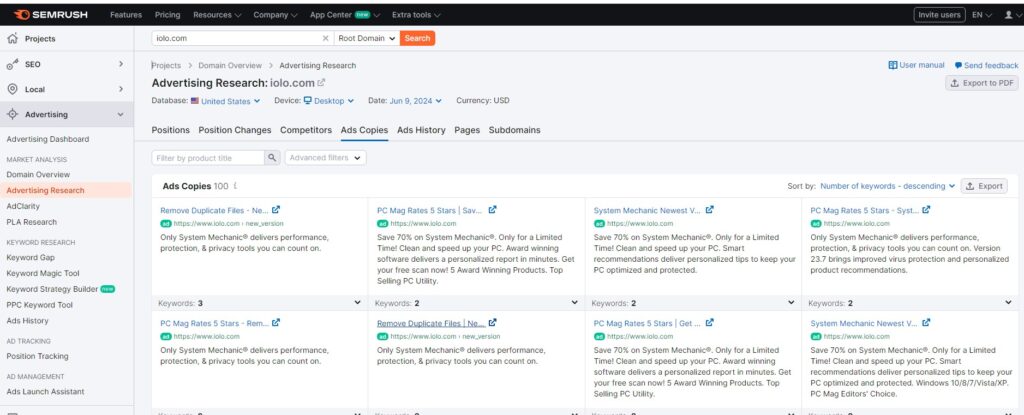
You can use the SEMrush tool to spy on the actual ads the product owner is running for inspiration.
For your affiliate bridge page, I recommend focusing on a simple page that looks like an official discount or coupon page for that product. This will match the searcher’s intent and leadThis is a type of conversion wherein the user only needs to submit specific information for the conversion to be considered. Businesses use such leads to get in touch with potential customers. to very high conversions.
The landing pages can be built using a free tool called Systeme – Get Lifetime Free Access Here.
Setting Up Brand Bidding Search Ads on Google: Key Considerations and Challenges
When setting up your brand bidding search ads on Google, there are several important factors to keep in mind:
Keyword Research and Match Types
As mentioned before, tools like Google Keyword Planner and SEMrush are great for researching the search volume and competition level for your target brand keywords. In addition to the exact brand name, consider bidding on variations like “[brand name] discount”, “[brand name] coupon” etc. When setting up your campaign, use a mix of broad, phrase, and exact match keywords to capture the most relevant trafficThis is the inflow of visitors to a page. while still giving Google some flexibility. To ensure your strategy is robust, include negative keywords to filter out irrelevant traffic and protect your budget from being wasted on unqualified clicks. Monitoring performance is equally crucial, so regularly analyze metricsKey performance indicators used to measure the success of affiliate marketing efforts, such as conversion rate, EPC, and ROI. like CTRThe percentage of people who click on a specific link or call to action out of the total number who view it. and conversion rates to refine your approach. By incorporating a campaign planning checklist for marketers, you can ensure all critical elements, from keyword selection to ad copy optimization, are meticulously addressed for maximum ROIReturn on Investment, a key performance indicator calculated as a percentage by dividing profit by cost and multiplying by 100..
Ad Copy and Extensions
Your ad copy should closely match what a search user expects from an official brand ad. Study the brand’s ads for inspiration, but be careful not to copy them verbatim. Use ad extensions like site links, callouts, and structured snippets to take up more real estate and drive more clicks. Consider using dynamic keyword insertion to customize your headlines for each search query.
Bids and Budget Management
Brand keywords can get expensive, especially for popular products. Do your math and ensure you can afford the estimated cost per click while maintaining profitability. Structure your campaigns with separate ad groups for different types of brand keywords. This allows you to set different bids based on the expected conversion rate of each keyword group. Keep a close eye on your search termThe word or combination of words used to find a particular topic online via search engines. reports and be aggressive about adding negative keywords for irrelevant terms that are eating up spending.
Landing Page Optimization
As click costs can be high for brand terms, your landing page needs to be hyper-optimized for conversions. Match your page’s look and feel to the brand as much as possible. Include the exact keyword in your headline. Make your call-to-action prominent and crystal clear. Use tools like heatmaps and session recordings to identify and fix any points of friction or confusion. Even small lifts in conversion rate can make a big difference to your profitability.
Some Challenges of Brand Bidding to Be Aware Of
While brand bidding can be very effective, it’s not without its challenges:
Trademark Infringement
Some brands protect their trademarks and may take legal action against affiliates bidding on their brand terms without permission. While you can still typically bid on the keywords themselves, using the actual trademark in your ad copy can be risky. This is something to be aware of, especially if bidding on big-name brands.
Competition from Other Affiliates
You’re likely not the only affiliate who has thought to bid on these juicy brand keywords. Expect competition from other savvy marketers. This is why optimization of ad copy, landing page, and conversion rate are so important. You need every edge you can get to stay profitable.
Volatile Search Volume
Search volume for brand keywords can be unpredictable, especially for new product launches, seasonal items, or anything that goes viral suddenly. Your formerly profitable campaign can become unprofitable overnight if search volume and competition spike suddenly. Stay on your toes and be nimble enough to adapt quickly as market conditions change.
Despite these challenges, brand bidding remains one of the most effective ways for affiliates to get started on a limited budget. The key is to start small, track everything religiously, and scale up slowly. Always have a pulse on your core metrics and be proactive about optimizing for profitability. With patience and persistence, brand bidding can be a powerful addition to your affiliate arsenal.
How to Scale a Brand Bidding Campaign Into Much More: Advanced Strategies
Once you’ve started generating initial profits with the brand bidding strategyA plan for determining how much to bid for ad placements in pay-per-click advertising campaigns., it’s time to consider scaling up. Here are some more advanced ways to grow your affiliate earnings:
Expand to Other Offers in the Same Niche
If you’ve found success promoting one product, chances are there are many other related products that your audience would also be interested in. Use your affiliate networkA platform that connects merchants with affiliates, managing tracking, reporting, and payments while providing a centralized marketplace for affiliate programs.’s search tools to find other offers in the same niche. Then, replicate your brand bidding strategy with these new products.
Test Other Niche Iterations
Let’s say you found success promoting a weight loss product. Consider branching out to other health-related verticals like muscle building, nutrition, skincare, etc. Oftentimes, your existing ad copy and landing pages can be easily adapted. The key is to systemize what’s working and apply it to new niches.
Scale Up Your Ad Spend
As you generate more profitTotal affiliate earnings, calculated by subtracting total cost from total revenue generated., reinvest a significant portion of it into your ad spend. If you know an offer is converting profitably, don’t be afraid to increase your budget and scale up the traffic. Keep a close eye on your key metrics to maintain profitability as you scale.
Expand to More Competitive Keywords and Angles
While brand bidding is a great way to get started, you’ll eventually want to expand to more competitive (and expensive) keywords to get more traffic. Tools like SEMrush or Google Keyword Planner can show you what other keywords your competitors are bidding on. Test adding some of these terms to your campaigns.
Branch Out to Other Traffic Sources
Don’t put all your eggs in one basket! Once you have some profits, consider testing other paid trafficVisitors who come to a website as a result of paid advertising efforts, such as PPC campaigns. sources like Facebook Ads, native ads, solo ads, etc. Often, you can adapt your winning ad copy and landing pages to work on these other platforms. Diversifying your traffic sources is key for long-term success.
Launch an Affiliate Content Site
You can’t beat having your niche content site for long-term, hands-off affiliate earnings. Check out our 5-course affiliate marketing roadmap to building a long-term affiliate marketing website. Use your affiliate profits to hire writers to create high-quality, keyword-targeted articles.
Build up your site’s authority and rankings over time. While this is a slower strategy, it can pay off big time with consistent passive incomeIncome that requires minimal labor to earn and maintain, often a goal in affiliate marketing. down the road.
The key with all of these scaling strategies is to reinvest your profits back into growing your business. It’s tempting to take your foot off the gas once you see some success. But if you keep pushing forward, your modest $1K starting budget can snowball into a thriving affiliate empire over time. Stay focused, put in the work, and the sky’s the limit!
Conclusion
I hope this post has given you a practical blueprint for generating high affiliate income, even with a relatively small budget. The key is being strategic, researching, and focusing on high-converting offers. If you work, that $1,000 starting point can compound into something much greater over time.