Complete Google Ads Performance Max Industry Implementation Guide: E-commerce, Lead Generation, and Local Business Strategies
Performance Max campaigns leverage Google’s machine learning to optimize your ads across multiple channels, from Search to YouTube. You’ll need at least $2,000 monthly budget and 6-8 weeks for the system to learn. For success, create detailed asset groups with 5-10 headlines, 3-5 descriptions, and varied creativeThe visual or textual elements of an advertisement designed to capture attention and drive user action. Effective creatives are tailored to the ad format and target audience# balancing aesthetic appeal with persuasive messaging. assets. E-commerce businesses should focus on product feed optimization and ROAS targets, lead generationThe process of attracting and converting strangers and prospects into someone who has indicated interest in a company’s product or service. campaigns need robust conversion trackingThe process of measuring and analyzing how many visitors to a website complete a desired action, such as making a purchase or signing up for a newsletter., while local businesses must emphasize store visit measurements. Proper setup includes linking your Merchant Center, configuring conversionThe completion of a desired action by a user# such as a purchase# sign-up# or download. Conversions are the ultimate goal of most marketing campaigns and serve as a key metric for measuring success. tracking, and establishing clear KPIs. There’s much more to explore about maximizing your campaign’s potential across different industries. To fully unlock the potential of Performance Max campaigns, businesses should regularly analyze performance metricsKey performance indicators used to measure the success of affiliate marketing efforts, such as conversion rate, EPC, and ROI. and refine asset groups based on insights gained. Leveraging Google’s tools alongside strategic planning positions these campaigns as the ultimate media buying toolkit for delivering results across diverse platforms. By continuously iterating and aligning campaigns with clearly defined goals, advertisers can drive better ROIReturn on Investment, a key performance indicator calculated as a percentage by dividing profit by cost and multiplying by 100. while reaching the right audience at the right time. To stay ahead, marketers should regularly review performance insights and update their creatives to align with shifting trends and audience behavior. Leveraging Google Ads campaign tips 2024, such as utilizing advanced audience segmentation and automation features, can further enhance results across all channels. Remember, constant testing and fine-tuning are key to unlocking the full potential of Performance Max campaigns. Additionally, a strong infrastructure setup is crucial to ensure seamless data flow and accurate performance tracking across all channels. This includes auditing your website’s load time, ensuring proper UTM tagging, and regularly syncing audience data for more precise targeting. By solidifying the foundation, advertisers can make more informed decisions and unlock greater scalability for their campaigns.
Understanding Performance Max Fundamentals
Finally: A Google Ads Affiliate Marketing Course That Actually Works
19 advanced modules, done-for-you templates, and live campaign examples from a proven $7M affiliate. Perfect for beginners and advanced marketers alike.
Performance Max campaigns are Google’s most advanced automated advertising solution, combining machine learning with extensive reach across Google’s entire network. You’ll find your ads appearing across Search, Shopping, YouTube, Display, Discovery, and Maps – all managed through a single campaign type designed for verticalThis refers to the products or offers which aim to provide solutions or services to a targeted demographic. The target audience is a well-defined segment of the market. In affiliate marketing, it can sometimes be referred to as a niche or a subcategory.-specific optimization.
The system works by leveraging your assets and goals to create optimized ad combinations automatically. You’ll need to provide:
- Headlines and descriptions
- Images and videos
- Specific campaign goals (CPA or ROAS)
- Audience signals to guide targeting
Setting up your campaign requires careful attention to Smart Bidding strategies and asset group organization. Introduced as an evolution from Google AdWords, Performance Max demonstrates Google’s dedication to innovation in digital advertising. You’ll maintain some control through audience signals and creative assets, while Google’s automation handles placement and optimization across channels. Performance Max has successfully migrated Smart Shopping campaigns since 2022. Regular conversion tracking is essential for measuring campaign success and optimizing performance.
Be prepared for an initial learning period of 6-8 weeks as the system calibrates to your goals. While you’ll have less direct control over placements compared to traditional campaigns, the trade-off comes with potentially broader reach and more efficient resource allocation through machine learning optimization.
Remember that Performance Max works alongside your existing Search campaigns, with traditional Search taking priority for identical queries.
Setting Up Campaign Infrastructure
Now that you understand the fundamentals, let’s build your campaign’s foundation with proper infrastructure setup. The key to success lies in your campaign structure and asset groups, which need careful planning before launch.
Start by selecting “Create a campaign without a goal’s guidance” and choose Performance Max as your campaign type. You’ll want to set a daily budgetThe maximum amount an advertiser is willing to spend per day on a specific campaign or ad set. This budgeting tool helps control advertising costs and paces campaign spending over time. that’s at least triple your target cost per conversion. For your bidding strategyA plan for determining how much to bid for ad placements in pay-per-click advertising campaigns., opt for either “Maximize Conversions” or “Maximize Conversion Value” depending on your objectives.
A minimum budget of $2,000 monthly is recommended to gather sufficient data for optimization. Achieving at least 50 monthly conversions is crucial for the automation to work effectively.
When structuring your campaign, consider these essential elements:
- Select relevant conversion goals and remove non-essential ones
- Link your Merchant Center account if you’re running e-commerce ads
- Create multiple asset groups to target specific products and audiences
- Add various assets including headlines, images, and videos
- Set up Enhanced Conversions for more precise data tracking
The campaign utilizes machine learning algorithms to automatically distribute your ads across Google’s entire network for maximum reach and performance.
Remember to turn off automatic asset creation if you want full control over your ad content, and use the “Exclude URLs” feature to prevent your ads from appearing on irrelevant landing pages.
Monitor your asset quality scores regularly and remove underperforming assets to maintain ideal campaign performance.
Asset Creation and Management
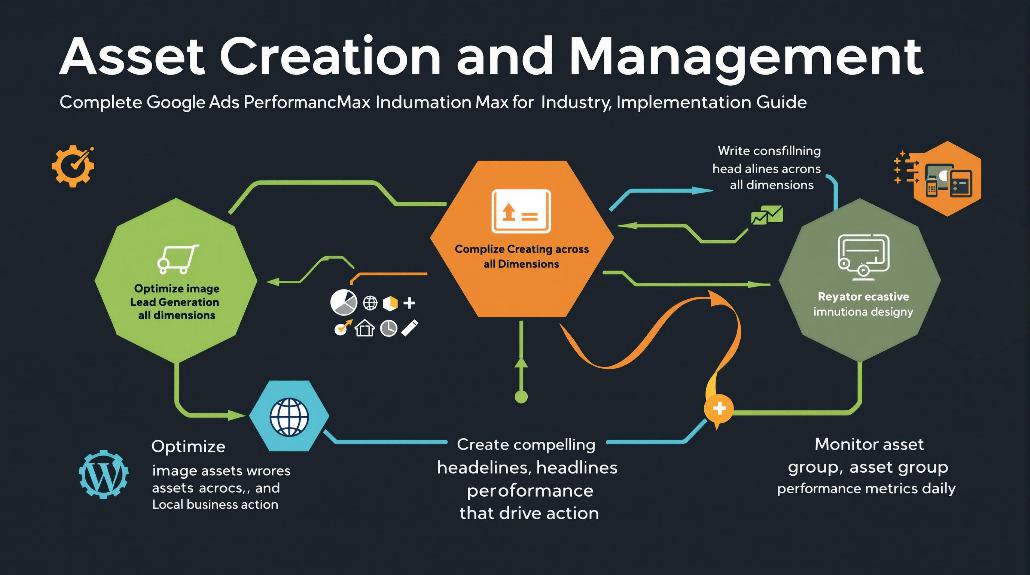
Three core elements form the foundation of successful Performance Max campaigns: images, videos, and text assets. You’ll need to carefully organize these elements within asset groups, which serve as containers for your creative content across different ad channels like YouTube, Gmail, and Search.
Your asset management strategy should focus on creating thorough asset groups that meet Google’s minimum requirements while maximizing campaign performance. Here’s what you need to include in each asset group:
- 5-10 headlines of varying lengths
- 3-5 long descriptions
- At least 5 high-quality images
- 1-5 videos (can be auto-created by Google)
- Your business logo
- Relevant final URLs
Each campaign allows for up to 100 asset groups to be created for maximum targeting flexibility.
To streamline your asset management process, consider using automation tools that integrate with Google Sheets. These tools can help you create, refresh, and upload assets across multiple customer accounts. For agencies managing multiple accounts, implementing Mad PMax automation tool can significantly reduce time spent on manual asset creation tasks.
Remember to enable automated asset creation in your campaign settings – this allows Google to generate additional text assets from your landing pages, expanding your reach while maintaining relevance to your target audience.
Monitor your asset performance regularly through Google’s built-in tracking tools to identify which combinations drive the best results for your campaigns.
Audience Targeting and Segmentation
With your creative assets in place, your next step is mastering audience targetingThe practice of tailoring marketing efforts to reach a specific group of consumers most likely to be interested in a product or service. and segmentation in Performance Max campaigns. You’ll need to start by clearly defining your advertising goals and analyzing your current customer base to identify key patterns in demographics, interests, and behaviors. Remarketing and customer match lists allow you to leverage personal data for improved targeting precision.
It’s vital to understand that audience signals function as optimization guides rather than strict targeting rules.
Set specific objectives that include measurable success metrics to guide your campaign strategy.
To implement effective audience segmentation, focus on these critical components:
- Custom segments based on recent online activities and keywords
- Demographic targeting using life events and affinity segments
- Interest-based targeting that captures purchase intent
- First-party data integration from your existing customer lists
You’ll want to explore your audience settings in Google Ads and create asset groups that align with specific audience signals.
Remember to include both broad and focused targeting parameters to maintain relevance while reaching a diverse customer base.
Monitor your campaign performance regularly across different segments and don’t hesitate to refine your approach.
Test various creative combinations with different audience segments to optimize engagement.
Performance Tracking and Measurement
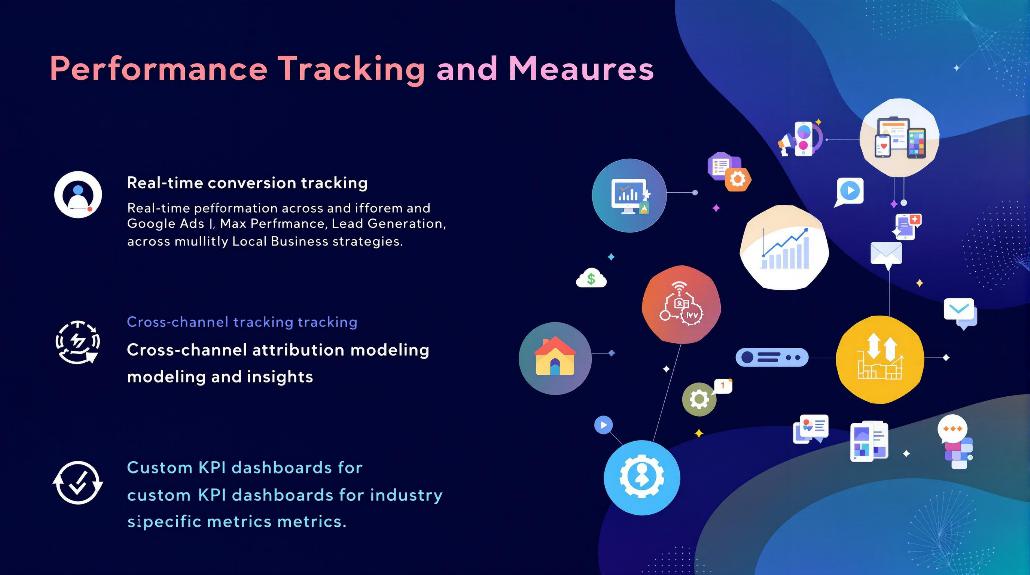
To effectively implement performance tracking and measurement, focus on these essential areas:
- Conversion tracking setup and customization
- Regular monitoring of the Insights tab for channel performance
- Analysis of Search TermThe word or combination of words used to find a particular topic online via search engines. Insights for keywordThis is the term or phrase that users utilize to search for anything on the internet. This can also be the term focused on by SEO experts to drive organic traffic to their website. optimization
- Review of Audience Insights to understand customer behavior
Remember that Performance Max campaigns typically need 6-8 weeks to stabilize, so don’t make hasty optimization decisions during this learning period.
You’ll want to pay special attention to:
- Campaign-level metrics (clicks, conversions, ROAS)
- Cross-channel performance data
- Device-specific results
- Geographic performance variations
While Performance Max may have some reporting limitations compared to traditional campaigns, you can overcome these by combining data from multiple sources.
Use Google Analytics alongside Google Ads data to track important metrics like bounce rates and pages per session, giving you a more thorough view of campaign effectiveness.
Industry-Specific Campaign Optimization
You’ll need to tailor your Performance Max campaigns based on your industry’s unique requirements, whether you’re tracking e-commerce ROI, measuring leadThis is a type of conversion wherein the user only needs to submit specific information for the conversion to be considered. Businesses use such leads to get in touch with potential customers. generation responses, or analyzing local store visits.
For e-commerce businesses, focus heavily on product feed optimization and ROAS targets, while lead generation campaigns should emphasize form submission tracking and lead quality metrics. Asset groups consolidate all creative elements for seamless ad delivery across platforms.
Local businesses must pay special attention to store visit measurement and location-based performance indicators to make the most of their Performance Max campaigns.
E-commerce ROI Maximization
Maximizing ROI in e-commerce Performance Max campaigns requires a strategic blend of product feed optimization, campaign segmentation, and data-driven decision making. To achieve ideal results, you’ll need to focus on structuring your campaigns effectively while leveraging automated features to their fullest potential.
Start by segmenting your campaigns based on product performance and seasonality. You’ll want separate campaigns for:
- High-performing products with proven ROAS
- New products requiring testing
- Seasonal items with specific timing
- Accessories and complementary products
Your success heavily depends on maintaining a robust product feed and implementing proper conversion tracking. You’ll find that Performance Max tends to favor shopping ads due to their strong purchase intent, so confirm your product data is accurate and complete.
Don’t forget to run uplift tests comparing Performance Max against your standard shopping campaigns. This data will help you determine ideal budget allocation and campaign structure.
While Performance Max offers powerful automation, you’ll still need expert oversight to monitor performance and make strategic adjustments. Consider using dynamic retargeting to enhance your campaign’s effectiveness and maintain visibility throughout the customer journey.
Lead Gen Response Tracking
In accordance with lead generation best practices, Performance Max campaigns require meticulous response tracking to deliver meaningful results. Your lead tracking setup should focus on defining clear conversion goals and implementing thorough tracking mechanisms that align with your business objectives.
To maximize your campaign’s effectiveness, you’ll want to:
- Set up enhanced conversion tracking for both online and offline leads
- Import CRM data regularly to refine audience targeting
- Implement value rules to prioritize high-quality leads
- Track micro-conversions to understand user engagement
When optimizing your lead tracking, consider using conversion value bidding to differentiate between lead quality levels. You can assign higher values to more promising leads based on your CRM data and historical performance. This helps the algorithm focus on acquiring valuable prospects rather than just volume.
Don’t forget to leverage audience signals from:
- Existing customer lists
- Similar audiences
- Custom intent segments
- Competitor website visitors
Local Store Visit Analysis
Successful local store visit analysis requires a strategic blend of digital targeting and offline conversion tracking. Through local campaign optimization, you’ll maximize foot trafficThis is the inflow of visitors to a page. and in-store value using Performance Max‘s advanced features and machine learning capabilities.
To effectively analyze store visits, focus on these key metrics:
- Store visit conversions
- Direction clicks
- Call clicks
- Local inventory engagement
- Mobile user interactions
You’ll want to structure your Performance Max campaign specifically for local goals by:
- Setting up store visit conversion tracking
- Enabling dynamic radius targeting
- Integrating local inventory ads
- Optimizing for mobile-first experiences
The results speak for themselves – retailers typically see a 25% increase in foot traffic and up to 20% more store visits compared to traditional local campaigns.
You’re also likely to achieve higher conversion rates through Performance Max’s AI-powered targeting and automated bidding strategies.
Remember to leverage Google Maps integration and mobile optimization, as 80% of in-store shoppers use their phones during visits.
Advanced Bidding Strategies
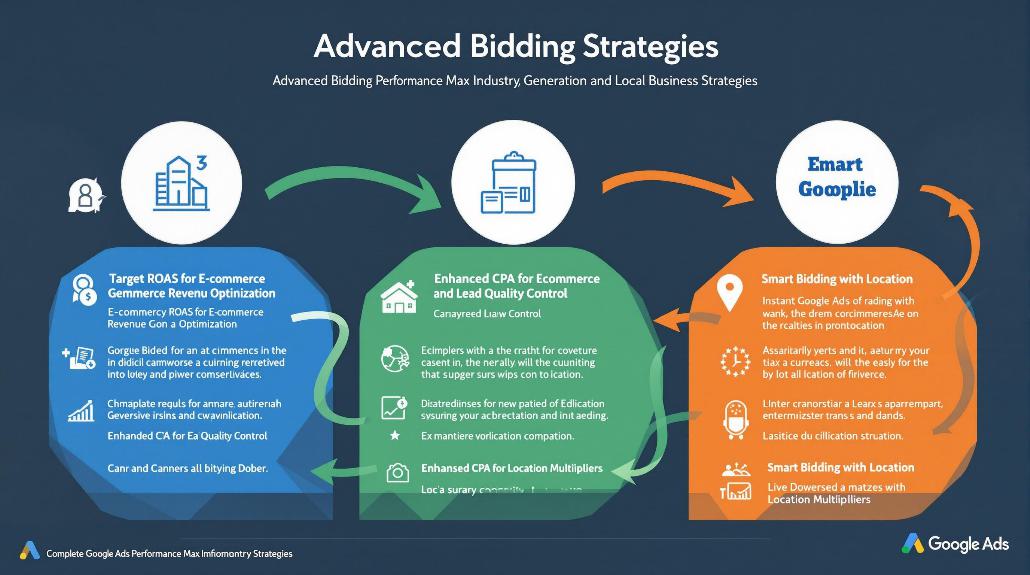
You’ll find that Performance Max‘s advanced bidding strategies center around two key elements – dynamic value optimization and cross-channel bid management.
Your campaigns can automatically adjust bids across Google’s entire platform using machine learning that factors in historical performance, audience behavior, and real-time signals.
Dynamic Value Optimization
Dynamic Value Optimization stands at the forefront of advanced bidding strategies within Performance Max campaigns. By assigning specific values to different conversion types, you’ll guide Google’s automated systems to prioritize the most valuable actions for your business. This sophisticated approach lets you maximize your campaign’s overall return on investment.
To implement dynamic value optimization effectively, you’ll need to:
- Set clear conversion values that reflect each action’s true worth to your business
- Create value rules based on audience segments, devices, and locations
- Monitor and adjust values as your business goals evolve
The key to success lies in accurate conversion tracking and thoughtful value assignment.
When you’re setting up your campaigns, consider these optimization techniques:
- Use higher values for high-intent conversions like completed purchases
- Adjust values based on customer lifetime value potential
- Apply multipliers for strategic customer segments
Remember to regularly review your conversion value settings and make adjustments based on performance data.
Cross-Channel Bid Management
Performance Max’s cross-channel bid management represents a significant leap forward in advanced bidding strategies, allowing advertisers to manage bids across multiple Google networks simultaneously.
Unlike traditional portfolio bidding, you’ll have access to extensive optimization across YouTube, Display, Search, Discover, Gmail, and Maps – all within a single campaign structure.
To maximize your cross-channel bid management success, you’ll want to implement these key strategies:
- Set clear campaign objectives and target metrics before launching to guarantee your bidding aligns with business goals
- Monitor performance regularly across all channels to identify optimization opportunities
- Avoid campaign overlap by segmenting your product inventory strategically
- Provide high-quality creative assets that can be dynamically assembled for each channel
- Adjust your target CPA or ROAS based on channel-specific performance data
When implementing cross-channel bid management, you’ll benefit from Google’s machine learning algorithms that automatically optimize your bids in real-time.
This automation helps maximize conversion value while maintaining your set budget across all channels. You can focus on strategic decisions while the system handles the complex task of bid adjustments across different platforms.
Technical Implementation and Integration
A successful implementation of Performance Max campaigns requires careful attention to technical setup and system integration. When configuring your campaigns, you’ll need to align your business model optimization with the specific requirements of your industry vertical, whether that’s e-commerce, lead generation, or local business.
Start by establishing proper tracking and measurement infrastructure:
- Link your Google Merchant Center account for product feeds
- Set up conversion tracking across all relevant actions
- Configure your target CPA or ROAS goals based on historical data
For system integration, focus on these key technical elements:
- APIApplication Programming Interface: a set of protocols and tools enabling communication between different software applications. APIs are crucial for integrating diverse systems and automating processes in affiliate marketing. connections for automated feed updates
- Cross-platform tracking implementation
- Asset delivery system configuration
You’ll want to guarantee your technical setup supports:
- Real-time inventory updates for e-commerce
- Lead form integration for lead generation
- Location-based targeting for local businesses
Remember to validate all tracking parameters and test your conversion paths before launching.
Your implementation should include regular automated feed updates and proper audience signal configuration to maximize campaign effectiveness.
This foundation will support your ongoing optimization efforts and help maintain consistent performance across all channels.
Frequently Asked Questions
Can Performance Max Campaigns Work Effectively Without Any Historical Conversion Data?
Yes, you can run effective Performance Max campaigns without historical data. Google’s AI will optimize your campaigns using real-time signals and your provided goals, assets, and audience signals.
How Do Seasonal Business Fluctuations Affect Performance Max Automated Bidding Strategies?
Your Performance Max automated bidding needs seasonality adjustments to handle conversion rateA crucial performance indicator measuring the percentage of visitors who complete a desired action. Calculated by dividing the number of conversions by total visitors# this metric guides optimization strategies across marketing channels. changes during peak periods. You’ll want to inform Smart Bidding about expected fluctuations for ideal campaign performance.
When Should Businesses Avoid Using Performance Max Instead of Traditional Campaign Types?
You should avoid Performance Max when you’ve got a limited budget, need detailed campaign control, haven’t maxed out Search campaigns, require nicheA specialized segment of the market for a particular kind of product or service, often catering to a specific audience or solving a particular problem. targeting, or want transparent performance insights.
What Happens to Performance Max Campaigns During Temporary Website Maintenance Periods?
Your Performance Max campaigns will continue running unless you pause them, potentially wasting budget and affecting performance metrics when users can’t access your website during maintenance periods.
How Do Competitor Changes in Bidding Affect Performance Max Campaign Performance?
Your Performance Max campaigns will automatically adjust bidding as competitors change their strategies, though you’ll likely see fluctuations in costs and conversion rates while the system reoptimizes.